You've got an idea. Maybe a pre-seed cheque too. What you don't have is a CTO, and every month without a product is a month of runway spent polishing slide decks. So you start looking offshore, and India keeps coming up.
It makes sense. There are a lot of very good engineers here, working with the same stacks teams use in San Francisco, London and Sydney. But "hire offshore" is also where plenty of first-time founders get burned. Deadlines slip. The code turns out to be something nobody else can maintain. Or the team just goes quiet three weeks in.
I'm Ruchit, and I run Axoryte Infosoft, a software development agency in Surat. So no, I'm not a neutral party. But this is the advice I'd give a friend before they hired any offshore MVP team, ours included.
Why founders look to India for an MVP
The real reasons are pretty unglamorous:
- Budget. A well-scoped MVP usually costs noticeably less than it would with an onshore agency. That's more runway left for finding customers.
- Breadth. One agency gives you design, frontend, backend, mobile, DevOps and project management. You can't hire all of that full-time at seed stage.
- Speed to start. An agency can often begin within days. Recruiting your own team takes months.
- Time zones. With a planned overlap window, work moves while you sleep, and you still talk live every day.
None of it matters if the team can't ship. Price is a reason to start looking. It's a terrible reason to choose.
Decide what your MVP actually has to do
Before you speak to a single agency, write down the one job your MVP has to do. One. A patient books and joins a video consult. A user generates an HR policy they can actually use. A shopper finds a product and buys it.
A good partner will push back on your scope. If every team you talk to says yes to your whole list, worry. An MVP tests your riskiest assumption. It isn't version 1.0 of the dream.
A brief I'd be happy to receive covers:
- The problem, and who has it
- The one core user journey, step by step
- Must-haves and nice-to-haves, as two separate lists
- Integrations: payments, auth, AI APIs, third-party data
- Compliance (HIPAA, GDPR, CCPA) if you're in health, legal, HR or finance
- Your budget range and the launch window you're aiming for
How much does an MVP cost in India?
Every agency prices differently. Here are our published ranges, so you have something concrete to compare against:
| What you're buildingTypical range (USD) | |
| Basic marketing website | $500 – $2,000 |
| Custom web application | $3,000 – $15,000 |
| Mobile app MVP | $5,000 – $15,000 |
| Medium-complexity app (Flutter, iOS + Android) | $15,000 – $50,000 |
| Complex platforms | $50,000+ |
| Ongoing maintenance | From $500/month |
Where you land depends on user roles, integrations, real-time features like chat or video, AI components and compliance. A HIPAA-compliant telehealth app with WebRTC video costs more than a booking app with the same number of screens. Most of the work sits behind the screens.
And if an agency won't give you any range until you've sat through three sales calls? That tells you something.
Fixed scope, time and materials, or a dedicated team?
You'll usually be offered three models. Pick based on how sure you are about what you're building.
- Fixed scope. Good when the MVP is clearly defined. Deliverables and price are agreed upfront. The catch: changes mid-build go through a change request.
- Agile time and materials (T&M). Good when you expect to learn as you go. You pay for time actually spent and reprioritise every sprint.
- Dedicated team. Good after the MVP, when you want a team that works like your own engineering department.
A common path is fixed scope for the MVP, then a dedicated team once there's traction.
8 questions to ask before you hire
Portfolios are curated. Answers to these are harder to fake:
- Who exactly writes the code? In-house, or subcontracted? Ask to meet the developers, not just the sales lead.
- How often will I see working software? A weekly demo you can click through beats any status report.
- How do we talk day to day? Look for a shared Slack channel and a fixed overlap with your hours.
- Who's my single point of contact? A dedicated project manager saves you from re-explaining context to five people.
- Who owns the IP? You should own 100% of the code and IP on delivery, in writing. Sign an NDA before sharing details.
- Why this stack? A good team explains its choices in terms of your product, not its own habits.
- What happens after launch? Get a defined post-launch support period and a clear maintenance option.
- Have you built something like this? Look for work close to your domain, and ask what was hard about it.
Red flags
- Huge round numbers ("1,000+ happy clients") from a company that's only a few years old
- No demos. Just screenshots and "it's almost done"
- A price far below every other quote you've received
- Hesitation about putting IP ownership in the contract
- A yes to every feature, without a single question
What a healthy engagement looks like
Here's how we run MVP projects at Axoryte. Use it as one benchmark, not the only one:
- Before kickoff: an NDA, a free discovery call, and a written scope with a price range
- Every week: sprint planning, an open Slack channel, and a live demo
- Throughout: one dedicated PM and an in-house team. No subcontracting.
- At launch: you own 100% of the IP, and 30 days of post-launch care are included
- On every website: SEO and AEO (readiness for AI-driven search) built in from day one
Some of what we've built: PolicyOwn, an AI legal and HR policy generator designed around GDPR and CCPA. MediConnect Telehealth, a HIPAA-compliant video consultation portal on Flutter, NestJS and WebRTC. Zenith AI Analytics, an ML-based task scheduling SaaS on Next.js, OpenAI and Postgres. Velo Cloud Observer, a Kubernetes observability dashboard in React, Go and Prometheus. And Mullein Eco-Commerce, a headless Shopify store on Next.js and GraphQL.
The tech stack question
You don't need to be technical. You just need to recognise a sensible stack when you see one. For most MVPs right now, that looks like:
- Web apps: Next.js or React with TypeScript, a Node.js or NestJS backend (FastAPI for Python-heavy AI work), and PostgreSQL
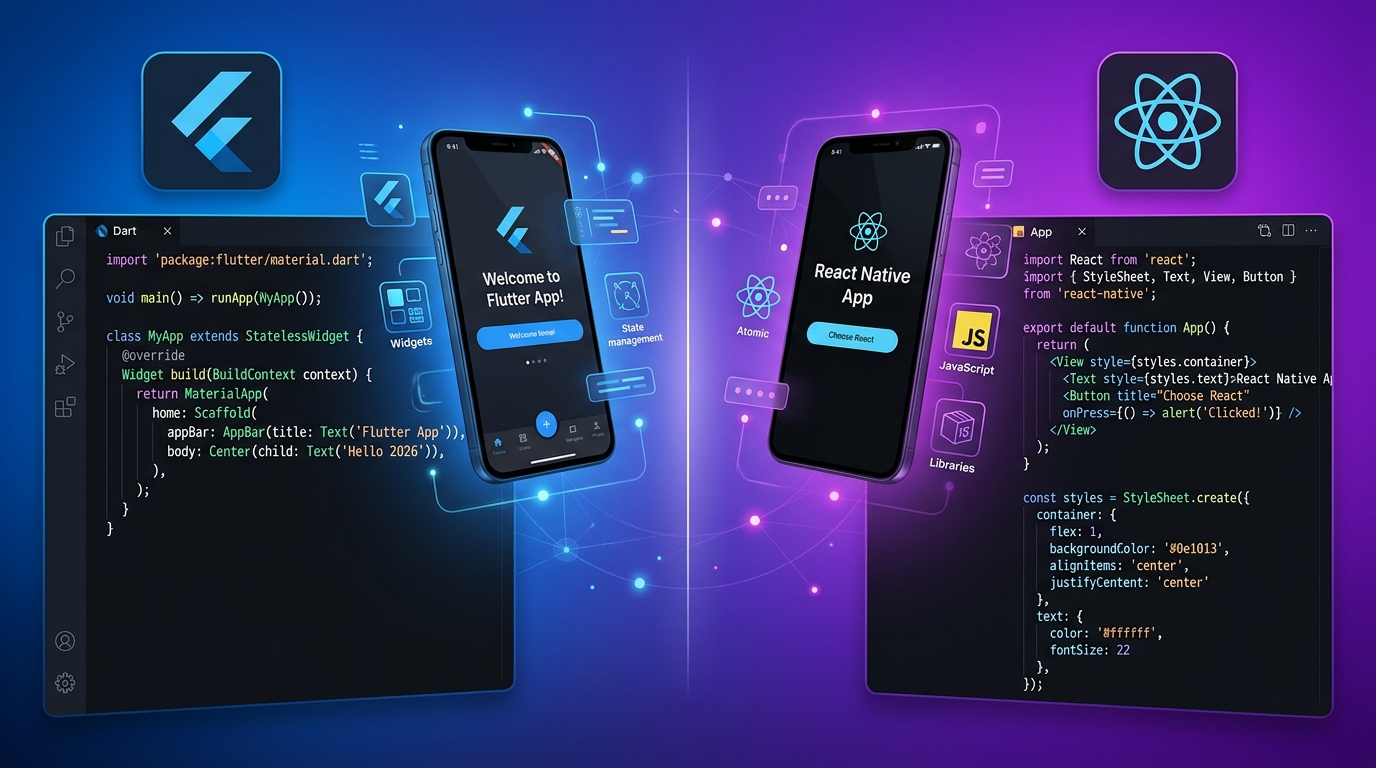
- Mobile: Flutter or React Native, so one codebase covers iOS and Android
- AI features: OpenAI or other LLM APIs, plus vector databases for search and retrieval
- Cloud: AWS or Azure, Docker, and CI/CD from the first week
Why mainstream tools? Because whoever maintains your product in two years, whether that's us, your own hires or another agency, should be able to pick it up without a rewrite.
Checklist before you sign
- A one-page MVP brief with a single core journey
- At least three quotes, each with a range and its assumptions
- An NDA signed before you share detailed specs
- An IP ownership clause in the contract
- A weekly demo cadence, agreed in writing
- A named PM and named developers
- A defined post-launch support period
- An engagement model you've chosen on purpose: fixed, T&M or dedicated
Want a second opinion on your scope?
If you're a founder in the US, UK, Canada, Australia or the UAE and you're weighing up an offshore MVP team in India, I'm happy to help you scope it, even if you end up building with someone else. The discovery call is free, the NDA comes first, and we reply within 24 hours.
FAQ
How long does it take to build an MVP with an offshore team?
It depends on scope. A focused MVP with one core journey is usually measured in weeks, not months. Ask for a sprint-by-sprint plan before you sign.
Is it safe to share my idea with an offshore agency?
Sign an NDA before you share details, and make sure the contract gives you 100% ownership of the code and IP.
Can I switch to a dedicated team after the MVP?
Yes. Plenty of founders build the MVP on a fixed scope, then move to a dedicated team or a monthly retainer.